Are Silk Pyjamas Hot in Summer?
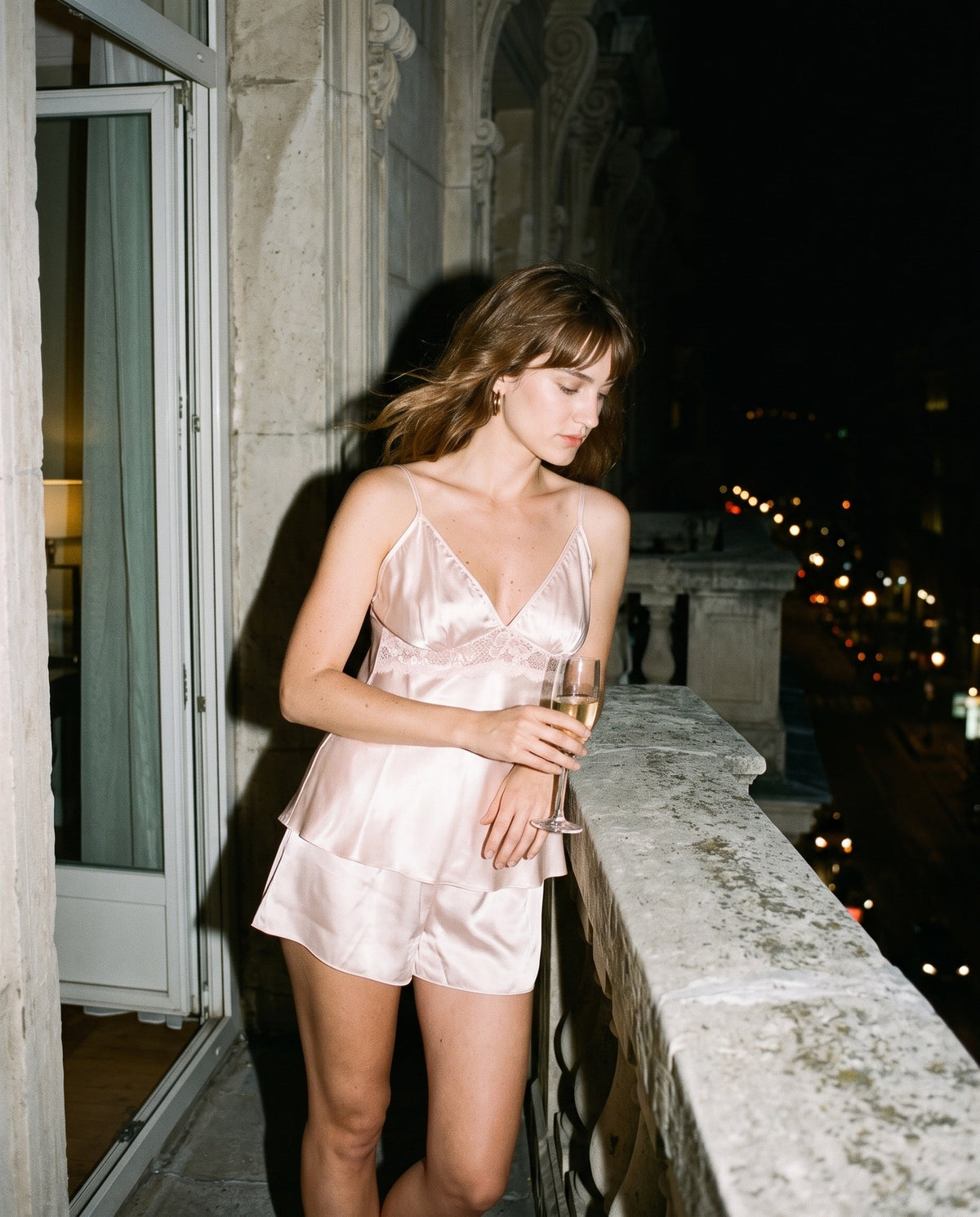
Generally, no. Finely woven silk is light, lets air through and absorbs some moisture, so on warm nights it doesn't cling to the skin and trap heat the way polyester satin does. On very hot, humid nights, though, the cut matters more than the fabric: choose a shorts set, a camisole or a short nightdress with thin straps.
How silk behaves in the heat
Fabric doesn't produce heat on its own. What warms you or keeps you cool is how much air a fabric holds between itself and your skin, and what it does with sweat. The silk used in nightwear is usually thin and tightly woven. It's light, puts no weight on the body and doesn't create a thick layer of air. Worn as a single, relaxed layer, that's why it doesn't feel hot in summer.
Woven thicker, or worn under other layers, the same fibre holds on to warmth. That double behaviour is why people say silk regulates temperature. It isn't a miracle property; it's simply what a fine, natural fibre does when it's used well.
Then there's the first touch. The surface of silk is smooth and slippery. The moment it touches your skin it usually feels cool, then it quickly takes on your body temperature. In summer that coolness is the first thing you notice, but the real difference lies elsewhere.
The real difference is moisture
What makes a summer night feel hot is often not the temperature itself but the sweat that stays on your skin. Silk is a fibre that can absorb moisture. With light sweating it takes up some of it and releases it into the air, so the fabric doesn't immediately feel damp. Synthetic fibres such as polyester absorb almost none. Sweat stays trapped between skin and fabric, the fabric clings and the night becomes stuffy.
Silk has its limits too. If you sweat a lot, silk gets wet as well. Wet silk clings to the skin, is uncomfortable until it dries and can show sweat marks. Silk isn't air conditioning. On a hot, humid summer night, the cut, the room and the bed together decide how much difference silk makes.
Weave and weight matter too
Silk isn't one fabric; the same fibre becomes very different fabrics depending on the weave. The most common in nightwear are charmeuse, crêpe de chine and habotai. Charmeuse has one lustrous, very smooth face and flows over the body. Crêpe de chine has a slightly grainy, matte surface and tends to cling less on a sweaty night. Habotai is a thin, light, plain weave.
Weight matters as well. Silk fabric weight is expressed in momme: the higher the number, the thicker, heavier and more durable the fabric. Heavier silk drapes better and lasts longer, but holds more heat. Lighter silk is airier, and more delicate in return. For summer, you don't need to look for the heaviest weave.
If the label or product description gives the weave name and the fibre content, read both together. A lustrous look on its own doesn't tell you a fabric is silk.
Silk vs polyester satin in summer
Satin is a type of weave, not a fibre. A shiny, slippery satin nightdress can be made of silk or of polyester. They look similar, but they behave differently against the skin in summer. To read the label and understand the difference, see our silk vs satin guide.
| Feature | Silk | Polyester satin |
|---|---|---|
| Fibre | Natural, protein-based | Synthetic |
| Moisture | Absorbs some and releases it into the air | Absorbs almost none |
| Feel on a sweaty night | Stays dry with light sweat, gets wet with heavy sweat | Clings quickly |
| First touch | Cool, slippery | Cool, slippery |
| Care | Delicate: by hand or on a delicate cycle, 30°C (86°F) | Tougher, easy care |
Polyester satin is cheap and durable, and that deserves saying fairly. But if you're choosing for summer nights, the difference in moisture is what decides it.
In summer, the cut matters more than the fabric
In summer, the difference between two pieces in the same fabric usually comes from the cut. How open the arms, legs and body are decides how much air reaches your skin.
Women
- Strappy top and shorts. The coolest combination. The Lace Cami + Shorts set is a thin-strapped top and short shorts, both edged with lace. It comes in powder pink, ecru, red, ice blue and khaki.
- Camisole and shorts. For a simpler line without lace. The Camisole + Shorts set comes in powder pink, khaki and black.
- Short nightdress. For those who'd rather wear one piece than shorts. The Lace Nightdress has a dress cut and a single small lace detail.
- Short-sleeved pyjama set. For sleeping in an air-conditioned room without leaving your arms completely bare. The powder pink, ecru and red versions of the Lace Pyjama Set have short sleeves.
Men
For men, the most practical summer choice is shorts. The men's Shorts come in five colours and can be worn on their own or with a thin T-shirt. On cooler evenings they can give way to long trousers; alternating two pieces means each one gets less wear during the summer months, when you wash more often.
Size: relaxed, not tight
In summer, choose silk in a size that doesn't squeeze the body. A tight fit presses the fabric against the skin, cuts down air circulation and cancels out silk's advantage on a sweaty night. Sizing up isn't the answer either: the shoulders and straps should stay in place while the fabric falls freely over the body and hips. How to measure is explained in our nightdress size guide.
The room and the bed play a part too
Thin silk pyjamas lose their advantage under a heavy synthetic duvet. In summer, pair them with cotton or linen bedding and a light coverlet. In an air-conditioned room, silk is a good middle ground: it's thin, so it doesn't feel hot, and on nights when completely bare arms get chilly it gives you a light layer.
A few small adjustments help as well. After a shower, let your skin dry completely before you dress; silk that touches damp skin clings and can show water marks. Let body lotion soak in fully. And if you leave your pyjamas on a hanger during the day instead of under the pillow, they shed the previous night's moisture and you get into bed in dry, cool fabric.
Caring for silk in summer
Summer is the toughest season for silk. Sweat, deodorant, sunscreen and body oil touch the fabric more often. A few habits extend the life of a piece:
- After a sweaty night, air the piece and wash it without leaving it too long. Silk left sweaty yellows over time.
- 30°C (86°F), inside out, by hand or in a mesh bag on a delicate cycle, with a gentle detergent. No bleach, no fabric softener.
- Don't dry it in the sun. It's tempting in summer, but direct sun fades the colour. Dry it in the shade, on a hanger or flat.
- Let deodorant, perfume, sunscreen and body oil dry completely before you dress.
The full steps are in how to wash silk, and methods for any marks left behind are in how to remove stains from silk.
Is silk right for everyone?
The honest answer: for most people, yes, but not for everyone. If you sweat heavily and want to machine-wash your pyjamas hot every night, cotton or linen may be more practical. Silk needs care. In return it gives you a light, slippery fabric that doesn't cling. To see which summer cut suits you, browse the pyjama sets and nightdress collections; silk pieces are marked on their product pages.
Frequently asked questions
Do silk pyjamas make you sweat?
Generally, no. Silk absorbs some moisture and releases it into the air, so it doesn't feel wet with light sweating. On very hot, humid nights silk can get wet too; then choose an open cut such as a shorts set or a short nightdress with straps.
Is silk or cotton cooler in summer?
Both are natural, breathable fibres. Silk is thinner and smoother and doesn't cling with light sweating; cotton copes better with getting wet and frequent washing, and is easier to care for. If you sweat heavily, cotton may be more practical; if you sweat lightly, silk is more comfortable.
Are satin pyjamas hot in summer?
It depends on the fibre the satin is made from. Polyester satin absorbs almost no moisture, so it clings on sweaty nights and can feel hot. Satin woven from silk absorbs some moisture. Read the label.
Are silk pyjamas too cold with air conditioning?
Thin silk pyjamas are usually a good middle ground in an air-conditioned room: they don't feel hot, but they don't leave your arms and legs completely bare either. For a cooler room, choose a set with short sleeves or long trousers.
How often should you wash silk pyjamas in summer?
After a sweaty night, without leaving them too long. Sweat and deodorant yellow silk over time. Every wash: 30°C, inside out, gentle detergent and drying in the shade.