Types of Silk Fabric: 8 Weaves from Charmeuse to Dupioni
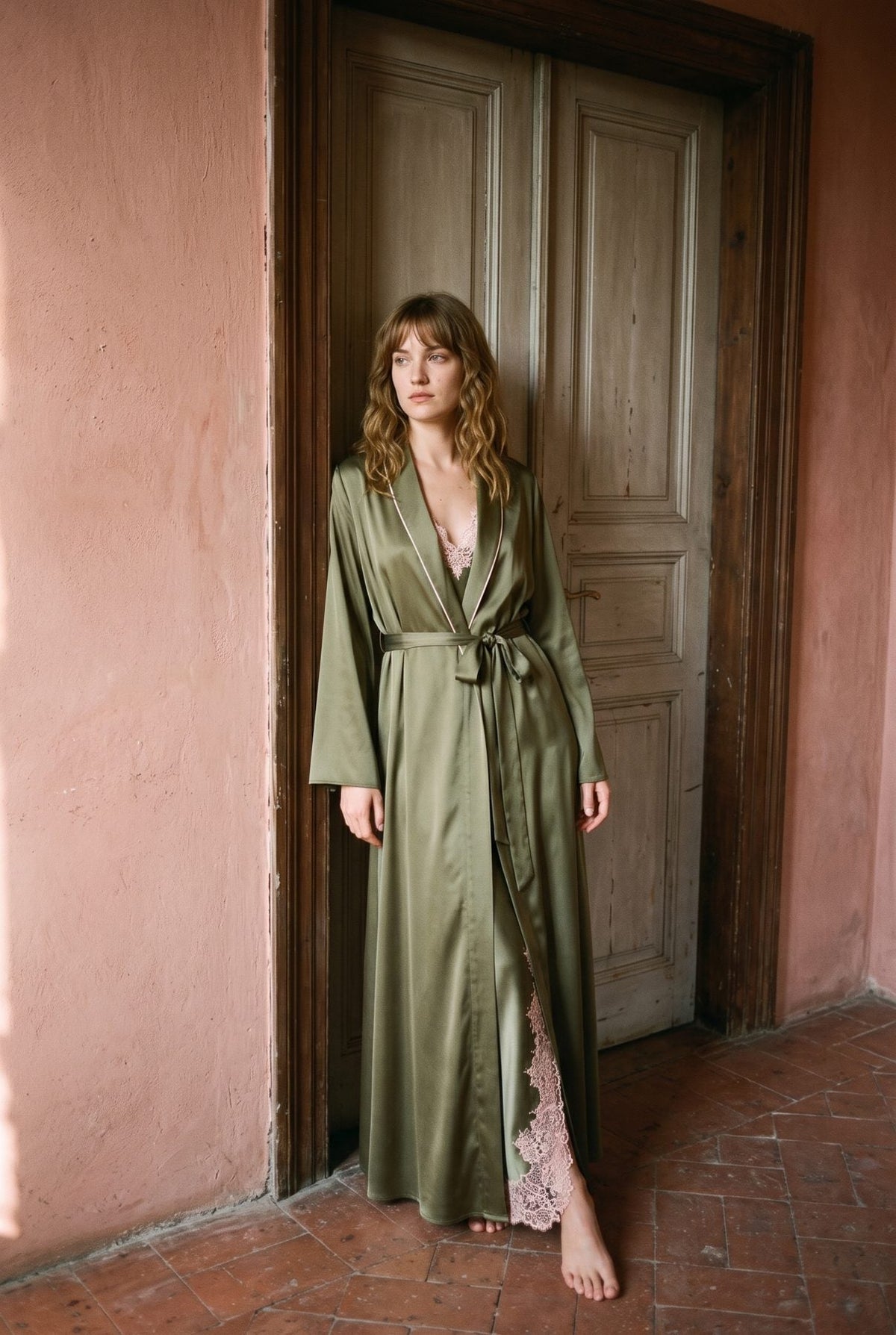
Even when the fibre is the same, silk fabrics differ by weave and by how tightly the yarn is twisted. The most common types are charmeuse, crêpe de chine, habotai, twill, chiffon, georgette, organza and dupioni. Sleepwear mostly uses fluid, slippery charmeuse and matte, light crêpe de chine.
What makes one silk fabric different from another?
Three things: weave, yarn twist and weight. The weave is how the threads interlace. A satin weave gives a glossy, slippery face; a plain weave a flat, balanced surface; a twill weave a diagonal line. Twist is how much the yarn is turned; tightly twisted yarn gives the fabric a grainy crepe texture and a little stretch. Weight is measured in momme and decides how opaque the fabric is and how it drapes. More on that in what is momme.
One note: most of these names describe the weave, not the fibre. Chiffon, georgette, organza and satin are made from polyester too. Only the label tells you a fabric is silk; how to read it is covered in silk vs satin.
There are big differences within one type as well. Two charmeuses can feel completely different depending on the evenness of the yarn, the density of the weave and the quality of the dyeing. The type name tells you the character of the fabric; to judge quality you need to touch it, look at it in the light and read the composition. For that, see how to tell if silk is real.
The silks most used in clothing: charmeuse, crêpe de chine, habotai, twill
Charmeuse
A light, very fluid silk woven in a satin weave, glossy on the face and matte on the back. It follows the line of the body and gathers light in the folds. It is one of the fabrics that responds best to a bias cut. Its slippery surface makes it hard to cut and sew, and it shows creases and water marks. It is often the first thing people picture when they think of silk.
In sleepwear: the classic choice for slip dresses, long nightdresses, camisoles and robes.
Crêpe de chine
Woven in a plain weave from twisted yarns. The surface is matte or softly lustrous, with a fine grain you can feel in the hand. It is less slippery than charmeuse, shows fewer creases and feels drier on the skin. Its two sides are similar, so the reverse is hard to spot.
In sleepwear: pyjama shirts, trousers and loungewear that can also be worn by day. A good option if you don't want shine.
Habotai
A smooth, soft silk with a Japanese name, woven in a plain weave. It is mostly light, with a subtle lustre. It is common in linings, scarves and hand-painting work, and is also sold as pongee or China silk. Heavier versions turn up in blouses and light loungewear.
In sleepwear: linings and light summer pieces. On its own it is usually too thin for a nightdress.
Silk twill
Woven in a twill weave, with fine diagonal lines on the surface. It has more body than charmeuse, is less slippery and carries prints crisply. Square scarves and ties are often made from it. It resists creasing better and keeps its shape well.
In sleepwear: men's pyjamas, robes and other pieces meant to look a little more structured.
Sheer silks: chiffon, georgette, organza
Chiffon
A very fine, semi-sheer fabric loosely woven from tightly twisted yarn. It floats lightly and, in a single layer, shows what is underneath. Silk chiffon is soft and light, but it slips easily and is hard to sew. A large share of fabric sold as chiffon is polyester; the word chiffon alone does not mean silk.
In sleepwear: an overlayer, sleeves or a skirt layer. Rarely used on its own.
Georgette
A close relative of chiffon. It too is semi-sheer and woven from twisted yarn, but it is heavier, more matte and has a more pronounced crepe surface. It drapes better than chiffon, slips less and is a little easier to sew.
In sleepwear: layered nightdresses, robe sleeves, floating skirts.
Organza
Fine and sheer, but stiff. It is woven from tightly twisted yarn and has a crisp hand; it doesn't drape over the body but holds its own volume. It is used for bridal skirts, veils, trains and decorative layers. On the skin it feels stiff and rustles.
In sleepwear: not suitable. At most a decorative layer or an accessory.
Textured silks: dupioni and others
Dupioni
Woven from irregular yarn reeled from double cocoons that two silkworms spun together. That is why its surface shows slubs, thicker spots here and there. It is crisp, rustling and somewhere between matte and glossy. When the warp and weft are different colours, it seems to shift between the two in the light. It is used for evening wear, jackets, wedding dresses and curtains.
In sleepwear: not suitable; it feels stiff on the skin and doesn't drape.
Other silks you may hear about
- Shantung: a slubbed surface similar to dupioni, but finer and more regular. Evening wear and jackets.
- Noil (raw silk): a matte, textured silk spun from short fibres that recalls cotton. Everyday clothing.
- Silk velvet: a heavy, soft pile fabric, usually built from silk together with viscose. Evening wear and wraps.
The eight types side by side
| Type | Surface | Drape | Sleepwear |
|---|---|---|---|
| Charmeuse | Glossy, slippery | Very fluid | Very suitable |
| Crêpe de chine | Matte, fine grain | Fluid | Very suitable |
| Habotai | Smooth, subtle lustre | Light | Linings, summer pieces |
| Twill | Diagonal lines | Structured | Men's sets, robes |
| Chiffon | Sheer | Floating | Layers |
| Georgette | Sheer, crepey | Floating, a little heavier | Layers |
| Organza | Sheer, stiff | Holds volume | Not suitable |
| Dupioni | Slubbed, crisp | No drape | Not suitable |
How to choose silk for sleepwear
First, consider whether the piece sits against the skin or is worn on top. For a piece that touches the skin directly and should follow the body, look for a fluid silk. The season changes the choice too: in summer a lighter, matte silk is more comfortable, in winter a heavier silk with more drape. In a bias-cut style like the Long Slip Dress, the drape of the fabric matters as much as the cut itself.
In a shirt-and-trousers set, easy movement and everyday wear come first. Sleeves, collar and hems move a lot, so a hand that shows few creases and doesn't slide around on the skin is more comfortable. Keep this in mind for a shirt and long trousers set like the Lace Pyjama Set.
For men, a robe should look a little more structured. In a knee-length, belted piece like the Shawl-Collar Robe, you expect the fabric to fall cleanly from the shoulder and the collar to hold its shape. For all sets, see the Pyjama Sets collection.
Think about the details separately, too. Lace, tulle, binding and lining are often a different fibre from the main fabric. A silk piece doesn't mean every detail on it is silk.
Care by type
Care for all silks rests on the same basics: low temperature, gentle detergent, no rubbing, drying in the shade. But the types react differently. Charmeuse shows water marks and creases and needs care with the iron. Crêpe de chine can shrink a little in the wash and its texture may puff up slightly; a low-heat iron brings it back. Twill is more durable, but if it is printed it needs a colour test. Organza and dupioni usually call for dry cleaning. In every case the label comes first; the step-by-step method is in how to wash silk.
Frequently asked questions
What is the best quality silk fabric?
There is no single best type. Quality is decided by the yarn, the density of the weave and the workmanship. The type tells you how the fabric looks and drapes: charmeuse is glossy and fluid, crêpe de chine matte and light.
What is the difference between charmeuse and crêpe de chine?
Charmeuse is a satin weave with a glossy, slippery face. Crêpe de chine is woven from twisted yarn in a plain weave; it has a matte, finely grained surface and shows fewer creases.
Is chiffon silk?
Chiffon is a weave. There is silk chiffon and there is polyester chiffon. Check the fibre on the label.
Which silk fabric is best for a nightdress?
Charmeuse and crêpe de chine, which drape fluidly on the skin, are the most common choices. Chiffon and georgette are used as layers; organza and dupioni are rarely used in sleepwear.
What is habotai silk?
A smooth, soft, usually light silk woven in a plain weave. It is used for linings, scarves and light summer pieces.